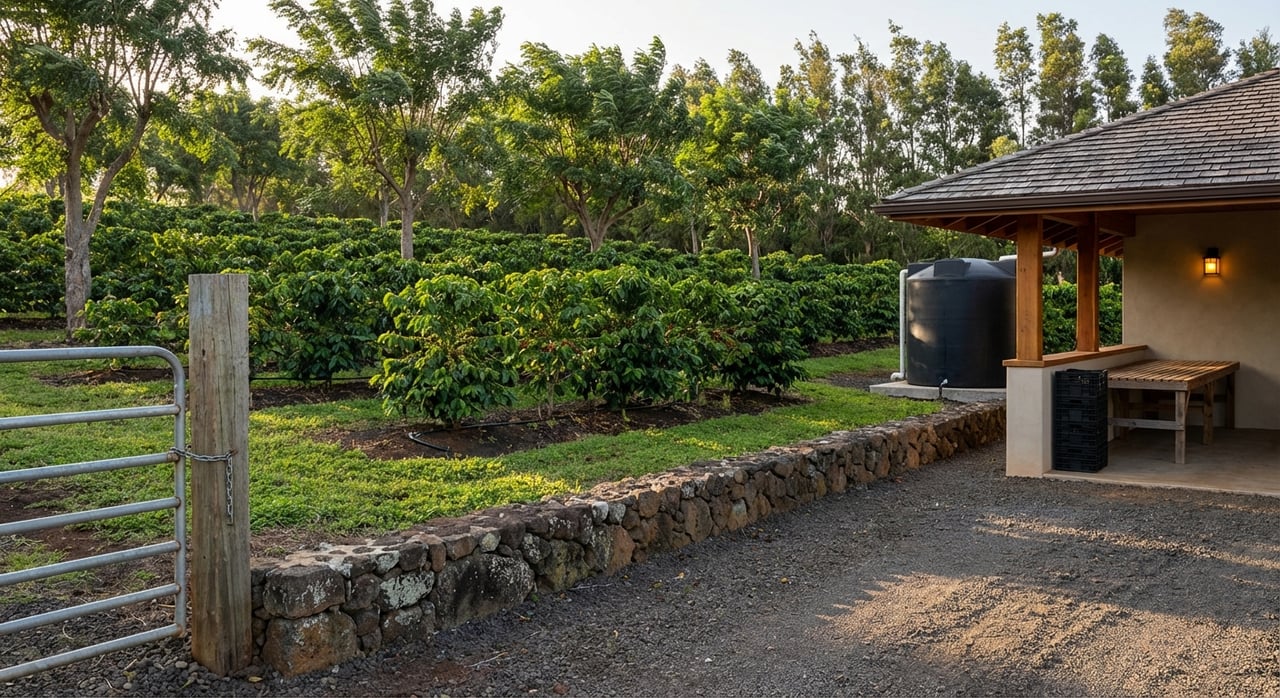
Picture yourself walking under morning sun with cool cloud cover drifting in from the coast, the scent of ripe coffee cherry on the breeze. If you are drawn to that rhythm, buying a coffee farm in Captain Cook could fit your lifestyle and investment goals. Still, farms are different from homes. Zoning, water, pests, and processing plans all shape value and day‑to‑day work. In this guide, you will learn what to look for, who to talk to, and how to move from interest to a confident purchase. Let’s dive in.
Why Captain Cook works for coffee
Captain Cook sits on the west slopes of the Big Island in South Kona, with much of the area between roughly 800 and 2,000 feet in elevation. This geography places you inside the Kona coffee region’s uplands and their well‑drained volcanic soils and coastal-influenced microclimate. The setting is part of what gives Kona coffee its specialty profile. You can confirm local context and elevation on the Captain Cook overview and broader background on the Kona coffee belt.
Practical takeaway: elevation, slope aspect, and parcel‑level microclimate drive variety choice, yield potential, and cup profile. Ask the seller for parcel elevation, slope aspect, and historical yield and grade records, then compare with regional context from Hawaii Grown Coffee’s region guide.
Parcel types and land‑use basics
Hawaii County uses agricultural and residential-agricultural zones like RA, FA, A, and IA. The number or suffix typically ties to minimum lot size and what on‑farm uses are permitted or conditional. Always confirm your parcel’s exact zoning and allowed uses in the county code. A helpful reference is the Hawaii County Code excerpts, but verify details with county planning staff.
Hawaii also designates land under State Land Use Districts such as Urban, Agricultural, Conservation, and Rural. Conservation district designations or overlays can significantly limit new development and add time to permitting. Larger projects can trigger State Land Use Commission review. Before you plan improvements, confirm state districting and any overlays with the Office of Planning and Hawaii County Planning.
You will see both fee simple and leasehold farms in Captain Cook. Leaseholds come with ground rent, transfer rules, and term limits that affect financing and resale. Ask for the full lease, including rent escalations and who pays property taxes, and review with a local real estate attorney.
Water, wastewater, and power
Water supply and permits
In rural South Kona, many farms use roof catchment tanks. Some have private wells, and municipal connections are less common. You should confirm tank capacity, pump horsepower, electrical supply, and whether irrigation is installed. If a well is part of the plan, check well logs, permit or registration status, and any water‑use reporting requirements with the Commission on Water Resource Management.
Wastewater and processing wastewater
Most rural parcels rely on septic systems. Plans to add worker housing, visitor spaces, or to expand wet processing can trigger county or State Department of Health review. Start early with the Hawaii Department of Health on any facility or wastewater questions.
Power and access
Confirm electrical service, the condition and type of road access, and who maintains it. If a private road association is involved, get dues and maintenance details. Good access reduces operational friction for harvest crews and equipment.
Processing infrastructure to look for
Coffee farms operate at different stages: harvesting cherry, pulping, fermentation or demucilaging, washing, drying, hulling, grading, storage, and roasting. Smaller estates may sun‑dry on patios or raised beds with hoshidana. Larger farms might own depulpers, mechanical dryers, and hullers or use a contract mill. Ask for a complete equipment list, its working condition, and any food safety or processing permits that apply. If you plan to sell roasted coffee or green beans to the public, confirm rules with DOH and the Hawaii Department of Agriculture, which also oversees movement of plant materials and related quarantines.
Agronomy and on‑farm risks
Varieties and yield context
Kona Typica remains common across Kona and influences cup profile, disease susceptibility, and management intensity. Many farms are small, often 2 to 5 acres, and yields vary with elevation, soil, and care. Peer‑reviewed work shows statewide parchment yields have ranged roughly 800 to 1,200 pounds per acre depending on year and pest pressure. Use the seller’s production records and research context to ground your projections. You can explore Hawaii coffee yield and pest economics in this peer‑reviewed summary.
Pests and diseases you should budget for
- Coffee Berry Borer (CBB) is established in Hawaii and can reduce yield and quality if unmanaged. Extension programs promote integrated pest management that blends sanitation, trapping, biological control, and targeted sprays. Review the farm’s CBB history and IPM practices.
- Coffee Leaf Rust (CLR) was detected in 2020 and can cause serious defoliation and multi‑year yield loss. Management guidance continues to evolve, and emergency fungicide authorizations were coordinated by state and federal agencies. For updates and management context, review CTAHR’s extension resources on CLR and the Hawaii Department of Agriculture’s EPA emergency approval notice.
Bottom line: ask for documented IPM practices, spray and sanitation records, and recent yield data. Model the cost of pest control and potential yield impacts in your operating budget.
What to request and inspect
Here is a practical due‑diligence list to guide showings and offers:
- Title and tenure
- Current deed and TMK.
- Full lease if leasehold, including term, rent escalations, transfer rules, and tax obligations.
- Zoning and land‑use classification
- County zoning map and code for the parcel. Confirm permitted uses, building-site minimums, and whether a special permit is needed for processing or agritourism. See the Hawaii County Code reference and verify with county staff.
- State Land Use District and any conservation overlays or shoreline setbacks.
- Water and wells
- Catchment tank sizes, pump specs, and irrigation layout.
- Well logs, permits or registration, and any water‑use reporting. Confirm with CWRM.
- Soils and slope
- NRCS soils report with pH and nutrient tests. Use the state’s NRCS mapping resources like the Hawaii geodata portal and supplement with a private soil scientist if needed.
- Pest and disease history
- Past yields, CBB and CLR incidence, spray schedules, pruning and harvest protocols, and participation in any area‑wide IPM programs. Cross-check practices against CTAHR guidance.
- Buildings and processing equipment
- Inventory of depulpers, tanks, drying beds, mechanical dryers, hullers, and storage. Ask for maintenance records and any food safety or labeling permits.
- Utilities and access
- Electrical service details, road maintenance agreements, road association dues, worker housing permits and condition, and recent property tax bills.
- Environmental and cultural constraints
- Any conservation district boundaries, historic or archaeological sites, native habitat, or setbacks that could affect improvements.
- Market and marketing records
- Sales contracts to mills or direct buyers, grading records, certifications, and whether the farm sells cherry, parchment, green, or roasted coffee.
Red flags that affect value
- Insufficient or uncertain water supply for irrigation and processing. Installing wells and storage adds cost and requires permits. Confirm status with CWRM.
- Conservation district parcels or overlays that limit development and slow approvals.
- Leaseholds with short remaining term or steep rent escalations.
- History of unmanaged CBB or CLR on site or nearby, which can depress yields and raise annual costs.
Who to have on your team
- Local real estate agent with agricultural expertise in Kona coffee properties.
- Hawaii land or real property attorney for title, lease, easements, and conservation implications.
- Licensed surveyor to confirm boundaries and easements.
- Civil or geotechnical engineer for slope stability, roads, drainage, and improvement plans.
- Hydrologist or well consultant for permits, pump sizing, and water supply review through CWRM.
- USDA NRCS conservation planner or a private soil scientist to map soils and recommend erosion controls using the Hawaii geodata portal.
- UH CTAHR extension specialists for agronomy and IPM training on CBB and CLR. Start with CTAHR’s publications.
- HDOA and DOH for quarantine, pesticide rules, and food processing permits. See the HDOA emergency approval notice for context on CLR fungicides.
- An accountant or CPA with agricultural experience and local lenders to model finance options, including potential USDA programs.
Step‑by‑step: how to buy with confidence
- Clarify your model
- Decide whether you want a lifestyle farm with limited processing or a commercial operation with wet mill, drying, and hulling. List needed acreage, target elevation range, and infrastructure must‑haves.
- Shortlist properties
- Focus on Captain Cook parcels that match your elevation and aspect goals. Request production records, equipment lists, and utility details early.
- Field verification
- Walk the rows. Check tree health, pruning history, and sanitation practices. Inspect water storage, pumps, and any well equipment. Note road grades, drainage, and any steep lava or thin‑soil areas.
- Regulatory checks
- Confirm zoning allowances and State districting. If improvements or agritourism are in your plan, outline the permit path with county planners and DOH. If a well exists or is planned, pull records with CWRM.
- Technical diligence
- Order a boundary survey, soils testing, equipment inspections, and a pest and disease records review. Consult CTAHR on IPM alignment.
- Financial modeling
- Build a yield and cost model that includes labor, inputs for CBB and CLR control, water and power, processing, road association dues, and lease costs if applicable. Use research benchmarks like the peer‑reviewed yield and pest economics summary to pressure test assumptions.
- Offer strategy and contingencies
- Structure timelines for inspections, permits review, and lease analysis. Include equipment and records as part of the sale where possible.
- Close and transition plan
- Schedule pruning, harvest, and processing calendars for the first year. Confirm coffee sales channels, whether you will deliver cherry to a mill, sell green, or add roasting.
Bringing it together
Buying a coffee farm in Captain Cook blends place and practice. Elevation and microclimate set the stage, but water, zoning, and pest management determine day‑to‑day reality and long‑term results. When you line up the right parcel at the right elevation, confirm water and permits, and ground your budget in real production and IPM data, you put yourself on a clear path to both lifestyle satisfaction and responsible stewardship.
If you are ready to explore Captain Cook coffee farms or want a second set of eyes on a property, connect with Brian Axelrod for local guidance and a smooth, high‑touch process from shortlist to closing.
FAQs
What makes Captain Cook good for coffee?
- Captain Cook sits within Kona’s upland coffee zone, with volcanic soils and a coastal-influenced microclimate that supports quality outcomes. See context on Kona coffee’s geography and Captain Cook’s location.
How important is elevation when buying a Captain Cook farm?
- Elevation and slope aspect influence temperature, ripening, and cup profile. Ask for parcel elevation and yield history and compare with regional insights from Hawaii Grown Coffee.
What permits do I need for water and wells on a Kona coffee farm?
- Well construction, pump standards, and some water‑use reporting are regulated by the state. Confirm logs and permit or registration status with the Commission on Water Resource Management.
How are pests like CBB and CLR managed on Hawaii coffee farms?
- Most farms use integrated pest management that combines sanitation, trapping, biological controls, and targeted sprays. Review guidance from CTAHR and HDOA’s CLR management updates.
What zoning applies to coffee properties in South Kona?
- Hawaii County uses agricultural categories such as RA, FA, A, and IA with specific rules on uses and minimum lot sizes. Start with the county code reference and confirm details with county planning staff.
What documents should I request before making an offer on a Captain Cook coffee farm?
- Ask for title and TMK, full lease terms if leasehold, zoning and state district confirmation, water system and well records, soils tests, pest and yield history, equipment lists, utility and road details, and any environmental or cultural constraints.