If you picture Big Island living as more than a beach view, Kealakekua may be exactly the kind of place you want to explore. This is a small South Kona community where coffee farms, ocean vistas, local history, and everyday essentials all sit close together. If you are considering a home, land, or an agricultural property here, understanding the lifestyle is just as important as understanding the listings. Let’s dive in.
Why Kealakekua Feels Different
Kealakekua is a compact community in Hawaii County with 2,307 residents, 830 households, and about 3.0 square miles of land. That small footprint shapes the area’s rhythm. Compared with larger nearby communities, Kealakekua feels more village-scale and rooted in day-to-day local life.
You are not choosing a place defined by sprawl or constant commercial activity. Instead, you get a setting where errands, agriculture, and residential life overlap in a practical way. That balance is a big part of Kealakekua’s appeal.
Coffee Country Is a Real Landscape
Kealakekua sits within the South Kona area closely tied to the Kona Coffee Belt. According to state and county planning sources, this is a narrow agricultural belt above Kealakekua that runs roughly 700 to 2,000 feet in elevation. In other words, coffee country here is not just branding. It is a specific, working landscape.
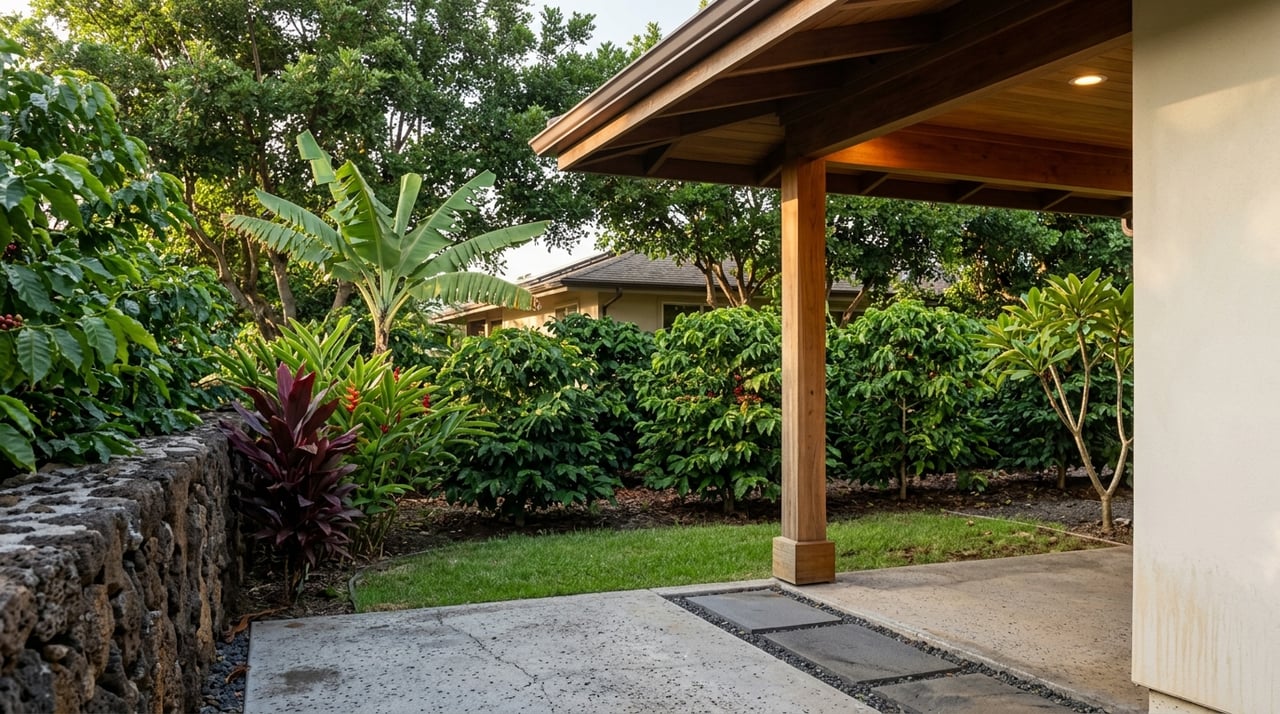
That matters when you look at homes in the area. The setting often includes small farms, hillside parcels, mature plantings, and a strong connection between land use and lifestyle. You are not just buying a house. In many cases, you are buying into a place where the land still plays an active role in daily life.
The agricultural identity is also ongoing, not historical in name only. CTAHR’s Kona Research Station in Kealakekua works on coffee and other crops at about 1,200 to 1,500 feet elevation, with average temperatures of 60 to 78 degrees and about 60 inches of annual rainfall. That gives you a useful picture of the growing environment that helps define the area.
The Coffee Lifestyle Has Deep Roots
Coffee has been part of Kona’s story for generations. Hawaiʻi’s Department of Agriculture notes that coffee was introduced to Hawaiʻi in 1813, and the Kona coffee industry emerged in the late 1820s. The region has remained in continuous production since the early commercial era.
Today, the landscape is still mostly small-scale. The Kona Coffee Council says the region includes about 600 independent coffee farms, many of them family operations of roughly 3 to 7 acres. Harvest typically runs from late August to late January, with repeated hand-picking throughout the season.
For you as a buyer, that means Kealakekua’s coffee identity is visible and practical. You may notice working farms, seasonal activity, and properties shaped by agricultural use. Even if you are not looking for a producing farm, this setting influences the look, pace, and feel of the community.
Everyday Living in Kealakekua
A rural setting does not mean giving up access to basics. Kealakekua has a compact but useful set of daily-life services that support full-time living as well as part-time ownership. That is important if you want a place that feels tucked away without feeling disconnected.
Kona Community Hospital is located in Kealakekua. Kona Pacific Public Charter School is also located in the community on Mamalahoa Highway. Kealakekua Ranch Center adds a practical mix of a supermarket, local restaurants, shops, health services, and hardware.
For many buyers, this blend is a major advantage. You get a more relaxed South Kona setting while still having nearby stops for errands and services. It supports a lifestyle that feels grounded rather than remote.
Access and Location
Kealakekua Bay is about 30 minutes south of Kailua-Kona via Highway 11, according to DLNR. That helps frame Kealakekua’s position within the broader Kona area. You are close enough for regional access, but far enough away to experience a different pace.
Public transit is also part of the local picture. Hawaiʻi County’s Route 204 bus serves Kealakekua stops, including Kona Community Hospital and Highway 11 locations, with connections to and from Kailua-Kona. For a small rural market, that is helpful context when thinking about mobility and everyday convenience.
Ocean Access Adds Another Layer
Kealakekua’s identity is not only about the uplands. It is also shaped by the coast, especially Kealakekua Bay State Historical Park. The bay is known for scenic views, wildlife viewing, snorkeling, and an important historic setting.
This mauka-to-makai relationship is one of the area’s strongest lifestyle draws. You can be surrounded by coffee-country scenery in the uplands, then head toward the bay for water access and dramatic coastal views. That contrast gives Kealakekua a sense of range that many buyers find compelling.
The setting is visually distinctive as well. State park information highlights scenic viewpoints, and local commercial spaces like Kealakekua Ranch Center note Pacific views from the property. That pairing of agricultural hillsides and ocean outlooks is central to the area’s appeal.
Historic and Cultural Anchors
Kealakekua has a strong sense of place because history is still visible in everyday life. Kealakekua Bay State Historical Park preserves the site of Captain Cook’s first extensive contact with Hawaiians in 1778. It remains one of the area’s best-known landmarks and an important cultural setting.
Nearby St. Benedict’s Painted Church adds another enduring local landmark. South Kona parish life dates to 1842, and the present church site was dedicated in 1902. The parish remains active with community services and outreach programs, showing how historic places here continue to function as part of current community life.
The annual Kona Coffee Cultural Festival, held every November, also reinforces this sense of continuity. It helps explain why coffee in this area is more than an agricultural product. It is part of the community’s annual rhythm and identity.
What Homes in Kealakekua Look Like
The housing mix in Kealakekua reflects the land itself. Current listings and market snapshots point to a range that can include single-family homes, vacant land, large-lot properties, ocean-view homes, waterfront homes, gated-community homes, and solar-equipped homes. That variety creates opportunities for both lifestyle buyers and buyers with agricultural goals.
Some properties will feel more residential and turnkey. Others may offer acreage, elevation, planted land, or a layout better suited to farm use. If you are searching here, it helps to define early whether your priority is view, privacy, production potential, ease of maintenance, or a combination of those goals.
Kealakekua Market Snapshot
Recent market figures vary by source, so they are best used as directional context rather than direct one-to-one comparisons. Zillow reported an average home value of $787,488 as of June 30, 2026, down 1.9% year over year. Realtor.com showed a median listing price of $695,000, 153 days on market, and 32 active listings.
Redfin reported a median sale price of $904,000 for the three months ending May 2026. Zillow Rentals listed an average rent of $2,700 with only one available rental at the time of update. Taken together, these numbers suggest a small rural market with limited inventory and pricing that can move depending on property type, land, and views.
For you, the key takeaway is simple. Kealakekua is not a one-size-fits-all market. Homes, land, and agricultural parcels can differ widely, so pricing often reflects far more than square footage alone.
Agricultural Zoning and Property Use
Kealakekua can be especially appealing if you are drawn to agricultural land or a small farm lifestyle. County code supports family agricultural districts as a blend of small-scale agriculture and residential use. That can include farm estates, small acreage farms, subsistence lots, and farm dwellings.
In the County’s A district, one single-family dwelling or one farm dwelling is permitted on a building site. That is useful high-level context if you are browsing coffee farms or larger parcels. It also shows why homes here often come with a different set of questions than a conventional subdivision property.
Due Diligence Matters Here
With hillside or agricultural parcels, infrastructure deserves close attention. DLNR notes that Kona water resources are groundwater-based and that there are no perennial streams in the Kona area. The South Kona planning document also says upland land suitable for development is limited.
For buyers, that means each parcel should be evaluated carefully. You will want to verify practical items like water, access, and permitted use on a property-by-property basis. In a market like Kealakekua, those details can shape both lifestyle and long-term value.
Who Kealakekua Often Appeals To
Kealakekua tends to attract buyers who want more than a standard residential experience. You may be looking for a home with a stronger connection to the land, a quieter South Kona setting, or an opportunity to own acreage within one of the Big Island’s most recognized agricultural areas. That can include full-time residents, second-home buyers, and those interested in specialty agricultural property.
It can also appeal to buyers who want a layered lifestyle. Kealakekua offers village-scale convenience, a live coffee-farming landscape, coastal access, and a historic sense of place. Few markets combine those elements in quite the same way.
Why Local Guidance Helps
In Kealakekua, two properties with similar acreage can offer very different ownership experiences. Elevation, views, access, water considerations, existing plantings, and intended use all matter. That is why local market knowledge is especially valuable here.
If you are considering a home, land parcel, or coffee property in South Kona, it helps to work with someone who understands both the lifestyle story and the practical details behind it. Kealakekua rewards careful, place-based decision-making.
Whether you are looking for a view home, a private retreat, or an agricultural opportunity tied to Kona’s coffee country, Kealakekua offers a distinctive part of the Big Island market. To explore properties or talk through what fits your goals, connect with Brian Axelrod.
FAQs
What is Kealakekua known for?
- Kealakekua is known for its coffee-country setting in South Kona, its connection to the Kona Coffee Belt, its access to Kealakekua Bay, and its blend of rural living, history, and small-scale daily conveniences.
What kinds of homes are available in Kealakekua?
- The Kealakekua market can include single-family homes, vacant land, large-lot properties, ocean-view homes, waterfront homes, gated-community homes, solar-equipped homes, and agricultural parcels.
Is Kealakekua a good place to buy agricultural property?
- Kealakekua can appeal to buyers seeking agricultural land because the area is tied to the Kona Coffee Belt and county code supports family agricultural districts that blend small-scale agriculture and residential use.
How far is Kealakekua from Kailua-Kona?
- Kealakekua Bay is about 30 minutes south of Kailua-Kona via Highway 11, which gives the area relatively straightforward access while still feeling separate from the busier core.
What should buyers check before purchasing land in Kealakekua?
- Buyers should verify parcel-specific details such as water, access, and permitted use, especially for hillside and agricultural properties where infrastructure and development conditions can vary.
Does Kealakekua have everyday services nearby?
- Yes. Kealakekua has a compact mix of services that includes Kona Community Hospital and Kealakekua Ranch Center, which offers grocery, dining, shops, health services, and hardware.