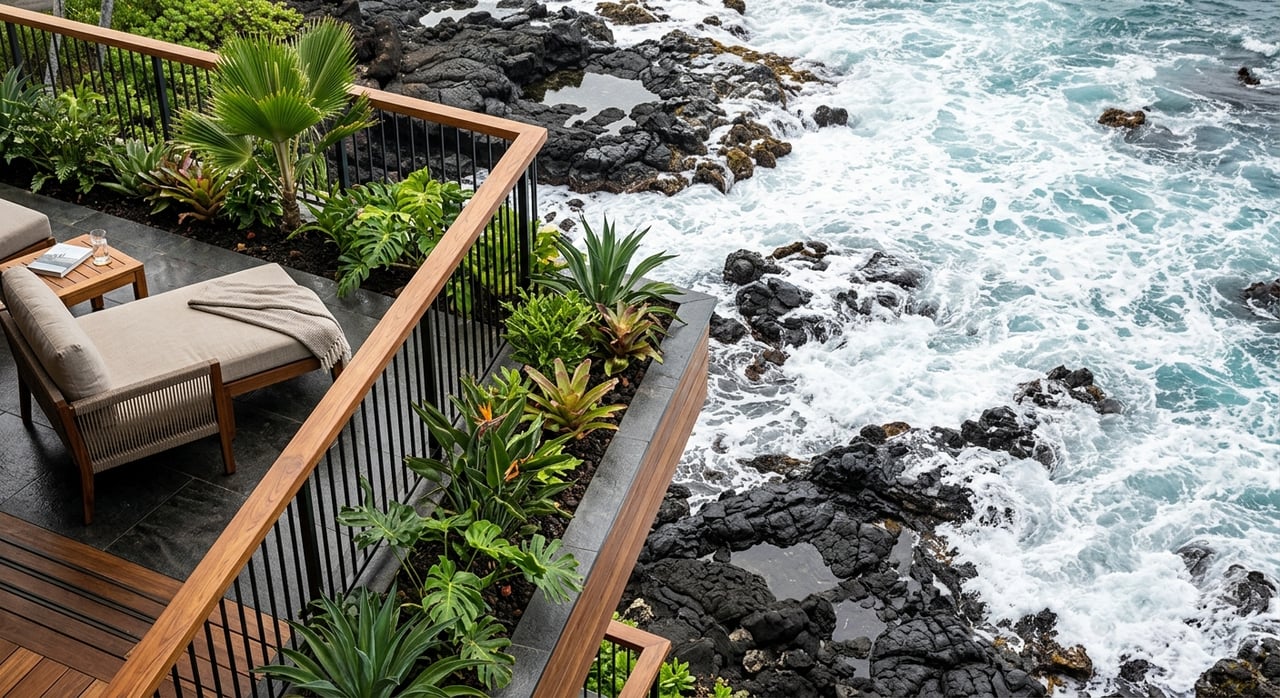
If you picture oceanfront living in Kailua-Kona as one simple lifestyle, it helps to pause for a closer look. Along this stretch of coast, daily life can feel urban and walkable, beach-centered and active, or quieter and more resort-oriented depending on where you are. If you are thinking about buying near the water, understanding those differences can help you choose the right fit with more confidence. Let’s dive in.
What Oceanfront Living Really Means
In Kailua-Kona, “oceanfront” is not one uniform experience. One address may place you near seawalls, pocket beaches, shops, and historic sites, while another may put you near rocky shoreline, surf access, or a bay with boating facilities. That variation matters because your day-to-day routine is shaped by shoreline type, access, parking, and how close you are to the places you use most.
The climate is one reason so many buyers are drawn to this part of the Big Island. According to NOAA climate normals for Kailua Kona Ke-Ahole Airport, the area has an annual mean daily high of 84.2°F, an annual mean daily low of 72.3°F, and annual precipitation of 9.87 inches. In practical terms, that supports an outdoor lifestyle for much of the year.
Aliʻi Drive is the main thread that connects much of this coastal experience. Historic Kailua Village describes it as a roughly seven-mile scenic byway, and the county’s planning framework treats the corridor as part of a wider network of parks, neighborhoods, historic sites, and pedestrian and bicycle connections. For many buyers, this road becomes the reference point for how connected, active, or relaxed oceanfront living will feel.
Daily Life in Kailua-Kona
For some homeowners, daily life near the ocean means walking to coffee, dinner, and the shoreline. For others, it means quick access to snorkeling, surf breaks, or a quieter bay setting. Kailua-Kona offers all of those options, but not all in the same place.
If you live in the core corridor, it may be possible to keep some days relatively car-light. Hele-On Route 201 runs seven days a week from 6 a.m. to 9 p.m. along Aliʻi Drive between downtown Kailua-Kona and Keauhou, with stops that include Royal Kona Resort, Honl’s Beach, Magic Sands, Kahaluʻu, and Keauhou Shopping Center. That kind of service can make errands, beach time, and casual outings easier in the most active part of town.
The downtown area also has a strong public and cultural rhythm. Kokua Kailua closes Aliʻi Drive to vehicles one Sunday each month and brings in vendor booths, merchants, music, shopping, and dining. If you enjoy an active streetscape and regular community events, that can be a meaningful part of the lifestyle.
Downtown Kailua Bay Lifestyle
Historic Kailua Village and Kailua Bay offer one of the most walkable oceanfront settings in Kona. The area includes views from Kamakahonu and Kailua Pier toward Huliheʻe Palace, with Mokuaikaua Church and other historic landmarks along Aliʻi Drive. You can explore more of that setting through the Historic Kailua Village history resources and the Huliheʻe Palace overview.
What this area usually does not offer is a long, private sandy beachfront feel. The county’s North Kona shoreline public access guide shows that downtown frontage often includes seawalls, small pocket beaches, and limited parking rather than broad stretches of sand. That means the tradeoff is often convenience and walkability versus a more secluded beach setting.
If your ideal day includes stepping out for breakfast, walking the bay, visiting the pier, and being close to shops and historic sites, downtown may be the right match. If you want a quieter shoreline with a more residential feel, you may prefer to look farther south or north along the coast.
Aliʻi Drive Beach Corridor
South of the core, the shoreline shifts into a more beach- and recreation-oriented pattern. The county guide identifies Pāhoehoe Beach Park, Laʻaloa Beach Park, and Kahaluʻu Beach Park as important points along this stretch, each with different conditions and amenities.
Laʻaloa Beach Park, also known as Magic Sands, White Sands, or Disappearing Sands, is described by the county as a white-sand beach with restrooms, showers, drinking water, and lifeguards. Kahaluʻu Beach Park includes gray-sand and rocky shoreline, plus swimming, surfing, picnicking, snorkeling, ADA-accessible restrooms, drinking water, and lifeguards. These details matter if you want a shoreline routine that includes easy beach access and practical services nearby.
At the same time, not every oceanfront property in this corridor sits in front of swimmable sand. The county also notes that many areas feature rocky shoreline, tidal ponds, or low cliffs, and warns that hazardous footing, waves, and currents are common at multiple sites. Before you assume an oceanfront address delivers a beach-out-your-door experience, it is important to verify the exact frontage.
Keauhou’s Bay-Oriented Setting
Keauhou offers a different version of oceanfront living. The county shoreline guide describes this southern stretch as a mix of rocky shoreline, cliffs, pebble beach, kayaking areas, and access trails near places such as Heʻeia Bay, Keauhou Bay Park, the Keauhou State Boating Facility, Kanaloa at Keauhou, and Keauhou-Kona Surf and Racquet Club.
In everyday terms, Keauhou often fits buyers who want a more residential-resort atmosphere rather than a dense walk-to-everything downtown setting. You may trade some core-town energy for a calmer bay environment and stronger connection to boating and resort-style shoreline access. For many second-home buyers and lifestyle buyers, that is a very appealing balance.
North Kona’s More Secluded Beaches
Farther north, the shoreline experience becomes more dramatic and more removed from town. The DLNR page for Kekaha Kai State Park notes that Mahaiʻula has a sandy beach and dune but no drinking water, while Maniniʻōwali, also known as Kua Bay, offers swimming in calm seas, bodysurfing, and picnicking, with parking and entrance fees required for that section.
That same DLNR page also warns about dangerous rip currents and pounding shore breaks, and notes that there are no lifeguards. The county shoreline guide reinforces those concerns by identifying hazardous footing, currents, and waves at Kua Bay and nearby access points. These beaches can be stunning, but they are different from the more routine in-town beach access many buyers imagine.
What Homes Look Like Here
One of the most important practical points is that oceanfront living in Kailua-Kona is often condo- and resort-heavy. The county shoreline guide references shoreline properties such as Kona Reef Condominium, Kona Makai Condos, Bali Kai Resort, Royal Kona Resort, Keauhou-Kona Surf and Racquet Club, and Kanaloa at Keauhou. That pattern reflects how limited and highly used the shoreline is.
Detached oceanfront homes do exist, but scarcity is part of the story. In fact, the County of Hawaiʻi announced in 2026 that it had acquired a North Kona shoreline parcel near Banyans that had previously been slated for a five-story condominium, underscoring both the value and rarity of coastal land. For buyers, that means the oceanfront search often involves choosing among condos, resort-adjacent residences, bayfront settings, and a smaller number of standalone homes.
Ownership Factors to Check Early
If you are considering a true shoreline property, access and regulation deserve careful attention early in your search. The county’s Special Management Area information states that shoreline lots generally fall under SMA review and that lots abutting the shoreline must have a minimum 40-foot shoreline setback, with variances requiring county review. That makes oceanfront ownership a site-planning issue as much as a lifestyle choice.
It is also wise to confirm the practical details that shape everyday use. Those may include:
- The exact shoreline type, such as sandy pocket beach, seawall, rocky frontage, or tidepools
- Public or private access patterns nearby
- Parking availability for guests and day-to-day use
- Whether beach entry is calm, seasonal, or hazardous
- Whether the location feels walkable, car-light, or more destination-based
These details can have just as much impact on your enjoyment as the view itself.
Access and Safety Matter Daily
The county repeatedly notes that coastal areas in North Kona can be affected by strong currents, seasonal high surf, rocky terrain, slippery shorebreaks, and hazardous footing. Similar cautions appear on the state pages for Old Kona Airport and Kekaha Kai. That does not mean oceanfront living is difficult, but it does mean local knowledge is essential.
Parking is another issue buyers sometimes underestimate. Along this coast, some areas have public lots or park parking, while others have limited roadside parking, parking across the street, resort-controlled access, or no on-site parking at all. If you expect friends and family to visit often, or if you want a simple in-and-out daily routine, this is worth reviewing closely.
Culture Is Part of the Waterfront
One feature that sets Kailua-Kona apart is how visible history and culture are along the coast. Huliheʻe Palace sits at the edge of Kailua Bay, Mokuaikaua Church is on Aliʻi Drive, and the village corridor brings together shoreline access, public spaces, and historic landmarks in one compact area. That gives the waterfront a sense of place that is different from a purely resort-based beach town.
The county is also planning for stronger public connections through the Kona Open Space Network, which is intended to connect open spaces, parks, neighborhoods, and historic sites while creating pedestrian and bicycle trail links. For residents, those long-term connections add to the appeal of living near town and near the shoreline.
Choosing the Right Oceanfront Fit
The best oceanfront property in Kailua-Kona is not simply the one closest to the water. It is the one that matches how you want to live day to day. Some buyers want to walk to restaurants and the pier. Others want beach-park access, a bay setting, or a quieter resort-style environment.
A focused local search can help you narrow that choice quickly. When you understand the differences between downtown Kailua Bay, the Aliʻi Drive beach corridor, Keauhou, and the farther north beaches, you can make a more informed decision and avoid costly assumptions about access, shoreline type, or lifestyle fit.
If you are exploring oceanfront opportunities in Kailua-Kona and want clear, local guidance on the shoreline, property types, and micro-market differences, connect with Brian Axelrod. You will get thoughtful, concierge-level support tailored to the way you want to live on the Big Island.
FAQs
What is daily life like in oceanfront Kailua-Kona?
- Daily life depends heavily on location. Downtown Kailua Bay is more walkable and urban, the Aliʻi Drive corridor is more beach- and activity-oriented, Keauhou feels more bay and resort centered, and areas farther north are more secluded and recreation focused.
What does oceanfront mean in Kailua-Kona real estate?
- In Kailua-Kona, oceanfront can mean sandy pocket beach, rocky shoreline, seawall frontage, tidepools, bay access, or resort-adjacent coastline. The frontage type should always be verified before you assume a property has direct swimmable beach access.
Are oceanfront homes in Kailua-Kona mostly condos or houses?
- Many oceanfront options in Kailua-Kona are condos or resort-oriented properties, with fewer detached homes along the shoreline. That reflects the scarcity of coastal land and the established development pattern in North Kona.
What should buyers check before buying oceanfront property in Kailua-Kona?
- Buyers should verify shoreline type, access, parking, safety conditions, and whether the parcel falls under Special Management Area review or shoreline setback requirements.
Is downtown Kailua-Kona a good fit for walkable oceanfront living?
- Downtown Kailua-Kona is one of the strongest options for a walkable oceanfront lifestyle because it places you near cafés, shops, the pier, and historic sites, though the shoreline is often more urbanized and parking can be limited.
Are Kailua-Kona beaches and shoreline conditions consistent along the coast?
- No. Shoreline conditions vary widely from downtown seawalls and pocket beaches to sandy beach parks, rocky access points, bays, and more secluded state park beaches with different safety and parking conditions.