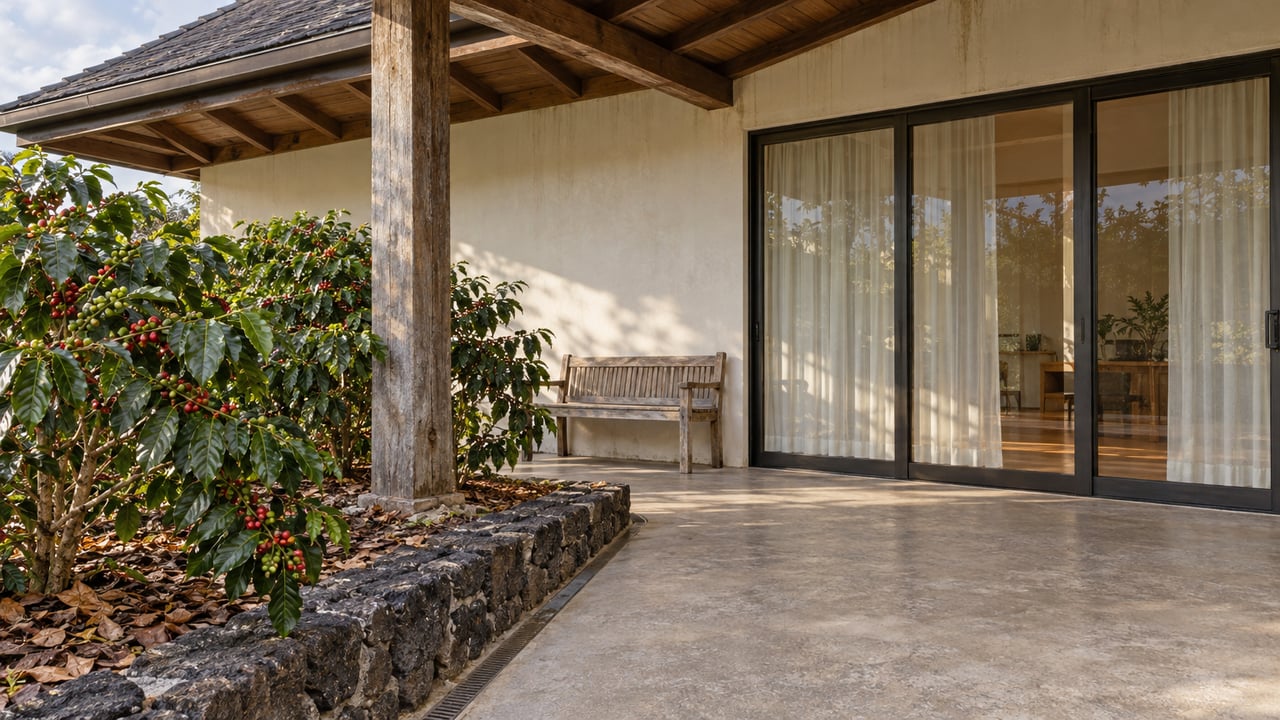
On many agricultural parcels in Kealakekua, the property tax line on the listing is low because the seller has a farming arrangement with Hawaiʻi County. If you buy the parcel and want that rate to continue, you sign a one-page county affidavit to take over the arrangement. That affidavit makes you responsible for rollback taxes, penalties and interest if the arrangement is ever breached. The county says that liability can be calculated on the years before you owned the land.
This would matter in any year. It matters more this fall because the county is retiring the program that most agricultural parcels have used, and the deadline to move into a replacement now falls in the middle of holiday escrow season.
The page that comes with the farm
The county's Real Property Tax Division calls it RP Form 19-60(g), the Affidavit for Continuation of Agricultural Dedication. The key passage reads:
We also agree to be held liable for any deferred or rollback taxes that may be imposed on this parcel due to a breach of the dedication, to include any penalties and interest. We further understand that this liability can be calculated based on the time the dedication was in effect prior to our purchase of the parcel.
A dedication is a commitment to keep land in agricultural use for a set term. In return, the county taxes the land at its agricultural value instead of its market value. When you sign the affidavit, the remaining years of that commitment become yours, and so does the cost of breaking it, measured from the day the seller signed up. On a 10-year dedication that started several years before you closed, a breach in your first year could reach back past your purchase date. The form doesn't give a penalty percentage or say how many years can be charged, so a buyer can't read their worst case off the page.
The low number on the listing reflects an agreement between the seller and the county, and it comes with a payment you'd owe if the farming stops.
Why the old tax figure is losing its meaning
Until recently, many agricultural parcels on the island didn't have a dedication at all. They used the county's nondedicated agricultural-use program, which carried no multi-year commitment. A 2024 overhaul, Ordinance 2024-072, effective October 2, 2024, phases that program out. Aloha State Daily reported in January 2026 that owners in the nondedicated program would have to choose a three-year or 10-year dedication to keep agricultural tax status.
The program wasn't small. On a June 2025 UH CTAHR podcast, county Real Property Tax Assistant Administrator Keita Jo estimated that about 9,000 to 9,500 parcels countywide were in the nondedicated program. Administrator Lisa Miura put all agricultural-program parcels at about 11,000.
Councilwoman Heather Kimball explained to Aloha State Daily what can happen when land leaves an agricultural program. "That can have an annual increase of 700%," she said. The same article reported that the jump often works out to about $1,300 to $1,500 more per year.
The filing window is still open. As of October 13, 2026, the county's Real Property Tax Office says Mayor Alameda's Second Supplemental Emergency Proclamation for Tropical Storm Lala extended agricultural dedication filing to December 14, 2026. The same proclamation lets real property taxes that were due August 20, 2026 be paid through December 14 without penalty or interest. If a parcel's owner hasn't filed for a dedication yet, your escrow could close before December 14 or after it. That timing decides who has to make the filing, and whether anyone does.
Where the savings actually come from
You might expect the agricultural class to have a low tax rate. It doesn't. Here are the county's rates for fiscal year 2026–27, which runs July 1, 2026 to June 30, 2027:
| Class | Rate per $1,000 of net taxable value, FY2026–27 |
|---|---|
| Homeowner | $5.75 |
| Agricultural and Native Forest | $9.35 |
| Residential, first $2 million | $11.10 |
| Residential, $2 million to $4 million | $14.50 |
| Residential, $4 million and above | $17.00 |
The agricultural rate is higher than the Homeowner rate. The saving comes from the value the rate is applied to. A dedicated parcel is taxed on a schedule of agricultural values per acre, not on what the land would sell for. According to the county's October 2024 program FAQ, the 10-year long-term dedication is assessed at one times agricultural value. The three-year short-term dedication is assessed at two times agricultural value, which the FAQ says matches the old nondedicated rate. The house is handled separately. The county's agricultural use value schedule caps each dwelling site at a quarter acre and values the dwelling and farm-site category at $500 per acre under both dedication terms.
That's why the 700% figure is possible. Kealakekua land is expensive at market value and cheap at agricultural value, and the gap between those two valuations is far bigger than any gap between rates. When a parcel leaves agricultural status, the owner is taxed on a much larger number.
The term also changes what a buyer takes on. The 10-year term gives the lowest assessment and the longest commitment. The three-year term costs more each year and ends sooner. Either way, the commitment still has years left on the day you sign the affidavit.
What a coffee parcel has to show the county
Both dedications require county agricultural zoning. The application asks for one of two things: a prior-year IRS Schedule F or State G49 showing at least $2,000 in gross farm income, or a farm plan. The FAQ lists supporting items that can fill in when a farm plan isn't completed for that first requirement: USDA organic certification, an approved NRCS or SWCD conservation plan, USDA food safety certification, receipts showing $10,000 in investment, or a recorded agricultural conservation easement.
Acreage is the next hurdle. The FAQ sets minimums of 0.25 acre for intensive or diversified agriculture, 1 acre for orchards, 2.5 acres for feed crops and fast-rotation forestry, and 5 acres for pasture. The county doesn't say on those pages how it classifies coffee. The Kona Coffee Farmers Association told its members that "Most active coffee or diversified ag farms will likely qualify for the 10 year Ag Dedication as an 'Orchard'." The association's walkthrough also says to subtract a quarter-acre homesite from orchard acreage. That subtraction matters on the small parcels common along the Belt Road. On the CTAHR podcast, Jo said applicants below an activity's minimum can submit a farm plan to support an exception.
A coffee parcel keeps its agricultural status only while its owner keeps documenting active farming for the county, and after closing that owner is the buyer.
Three county documents, three effective dates
The phase-out is set in law, but the county's own documents give different dates for when it takes effect:
- The October 2024 FAQ says nondedicated owners who applied by September 1, 2026 keep agricultural benefits through June 30, 2029, and those who didn't apply lose current benefits effective July 1, 2027.
- The December 2024 agricultural value schedule says the nondedicated program is repealed effective January 1, 2029. It also says applications filed between September 2, 2024 and September 1, 2026 qualify for a lower agricultural value starting January 1, 2027.
- The dedication application says a conversion from the nondedicated program takes effect July 1, 2029.
On top of those, the emergency proclamation moved the filing deadline to December 14, 2026. None of the three documents explains how that extension changes their dates. Two parcels next to each other could be on different timelines depending on when, or whether, their owners filed. The tax history on a listing reflects whichever timeline applies to that parcel.
What to request before the inspection period ends
- The parcel's current agricultural program: nondedicated, 3-year, 10-year, or none.
- For a dedication, the start date. That date sets how far back rollback liability could reach under the continuation affidavit.
- For a nondedicated parcel, whether the owner filed for a dedication, and when. The December 14, 2026 extension may still apply.
- The farm plan or income records that supported the application, since you would be the one meeting them after closing.
- The acreage counted as farmed once the quarter-acre homesite is taken out.
The Real Property Tax Division has an office at the West Hawaiʻi Civic Center in Kailua-Kona, and it lists phone numbers for its West Hawaiʻi appraisers and clerical staff on its forms.
FAQ
Does Bill 103's tax relief help a new buyer? Its scope is narrow. Aloha State Daily reported that it applies to owner-occupied homes taxed at agricultural value for at least 10 of the past 15 years that also qualify for the senior homeowner exemption. It holds land value at the last agricultural assessment and limits increases to 3% a year. It excludes vacant land, taxes new construction at market value, and expires December 31, 2029.
What is the new ʻĀina Kūpuna Dedication? It's a separate 10-year program created by Bill 163 in 2026. It's open to owners who meet family-ownership requirements going back before January 1, 1926, on parcels under 20 acres. A sale to anyone outside the qualifying line breaks the dedication and triggers a 10% penalty. First-year applications are due December 31, 2026.
When can a new owner file for a dedication? The application gives September 1 as the regular annual deadline, with the dedication taking effect the following July 1. For this year, the emergency proclamation extended filing to December 14, 2026.
This post is general information, not legal, tax or financial advice. Please confirm how these rules apply to a specific parcel with the Real Property Tax Division and your own tax professional.
If you're weighing a Kealakekua coffee parcel and want to know what its agricultural tax status means before you sign the affidavit, Brian Axelrod can help you collect the right documents from the seller while there's still time before December 14. Let's Connect.